Social Enterprises Podcasts
Offaly Local Development is researching the operations and services of social enterprises in the midlands.
OLDC is doing the research from the perspective of the United Nations universal call to action with 17 Sustainable Development goals and the degree of consideration and implementation of the SDGs in Ireland.
The information will delivered through a series of podcasts featuring local enterprises. The first podcast features Offaly Local Development Cormac Nolan explaining the reason for this study. Additional episodes will be delivered over the next few months, so call back frequently for updates.
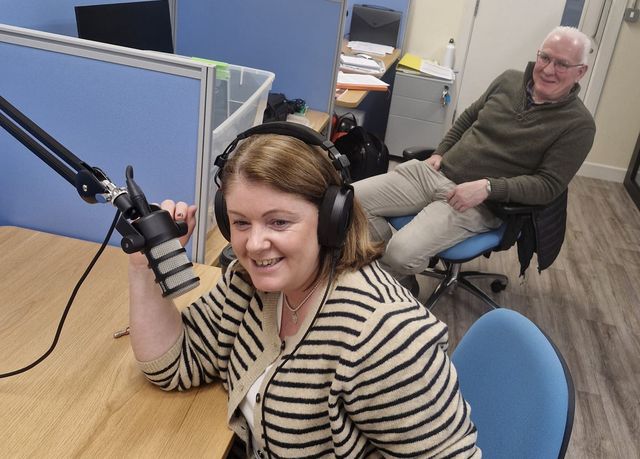
Episode 1Offaly Local Development Cormac NolanThe purpose of the United Nations 17 Sustainable Development goals is to improve the quality of everyone’s lives …
|
Episode 2Moneygall Community Development with Debbie WardMoneygall Community Development has achieved great heights |
Episode 3West Offaly Training Damian KeeneghanWest Offaly Training was established in 2002 as a social enterprise to provide affordable and accessible training and quality education to local and wider communities across the midlands. Audio only |
UN Sustainable Development goals
The United Nations (SDGs) are a universal call to action adopted by all UN Member States in 2015 as part of the 2030 Agenda for Sustainable Development. They serve as a shared blueprint for peace and prosperity for people and the planet, now and into the future. The 17 SDGs are interconnected and aim to address global challenges including poverty, inequality, climate change, environmental degradation, peace, and justice. They emphasize the importance of leaving no one behind, with a focus on reaching the most marginalized and vulnerable populations first.
The SDGs are universal, applying to all countries regardless of development level, and integrate the environmental, social, and economic dimensions of sustainable development.
They build upon previous international efforts, including the Millennium Development Goals (MDGs), but differ by being more comprehensive and inclusive. The goals are time-bound, with a target achievement date of 2030.
The 17 SDGs are: No Poverty (SDG 1), Zero Hunger (SDG 2), Good Health and Well-being (SDG 3), Quality Education (SDG 4), Gender Equality (SDG 5), Clean Water and Sanitation (SDG 6), Affordable and Clean Energy (SDG 7), Decent Work and Economic Growth (SDG 8), Industry, Innovation and Infrastructure (SDG 9), Reduced Inequalities (SDG 10), Sustainable Cities and Communities (SDG 11), Responsible Consumption and Production (SDG 12), Climate Action (SDG 13), Life Below Water (SDG 14), Life on Land (SDG 15), Peace, Justice and Strong Institutions (SDG 16), and Partnerships for the Goals (SDG 17).
Each goal has specific targets and indicators to measure progress, with 169 targets and 234 official indicators in use as of 2025.
The implementation of the SDGs requires significant financial resources, with a critical need for both public and private investment, and strengthened global partnerships. Despite the ambitious vision, progress has been uneven, with challenges including rising inequalities, climate change, biodiversity loss, and the lasting impacts of the COVID-19 pandemic. The UN Secretary-General publishes an annual SDG Progress Report to assess global advancement.